
FIELD GUIDE 13 / Soil & water

Lawn soil tests and pH

Turn a lab report into a focused lawn-care decision.

A close view of grass blades in natural light
Grass texture, photographed in natural light. This is an illustrative photograph, not a species-identification image. Photo credits.
ONE QUESTION TO START WITH

What question do you want the soil test to answer?

Read the lab’s sampling instructions before collecting soil.

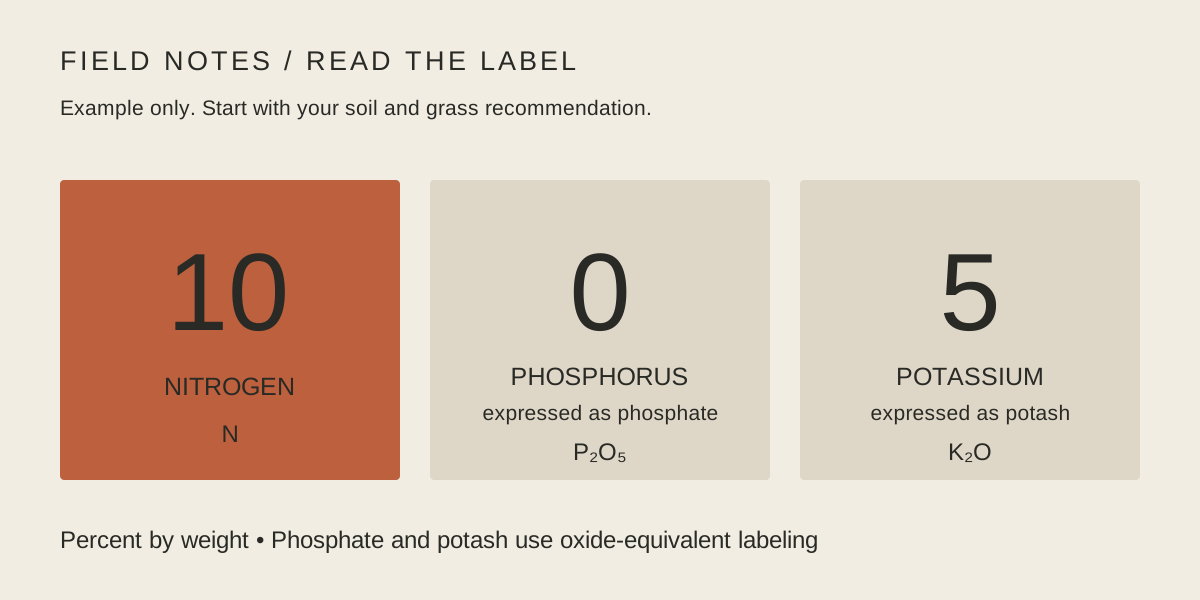
An example fertilizer label distinguishing nitrogen, phosphate and potash.
The soil recommendation comes before the fertilizer calculation.

A soil test is most useful when it belongs to a clearly defined area and a known grass. Write down the problem or decision first: a renovation, a persistent weak patch or a routine fertility check. That helps you select the right test and interpret the result.

Collect a representative sample

Follow the receiving laboratory’s depth, mixing, packaging and timing instructions. Minnesota Extension explains how multiple sampling locations can represent a lawn. Do not blend a distinctly troubled corner into an otherwise healthy area if you need to compare the two; ask the lab how to submit separate samples.

Separate measurements from prescriptions

pH is only one part of a soil report. A low number does not by itself specify how much lime to apply, and a simple probe is not equivalent to a laboratory nutrient analysis. Give the lab the grass type and intended use so its recommendations match your lawn.

Make the report usable

Save the result beside the measured lawn area and a record of recent applications. Translate any recommended rate carefully using the product analysis and label. If units or recommendations do not make sense, ask the lab or extension office before applying. Keep the original report so future tests can be compared without relying on memory or a product-shopping history.

TAKE IT INTO THE YARD

Your next three steps

  1. Choose a lab and read its instructions.
  2. Label each distinct sampling area on a sketch.
  3. Save test results, application dates and lawn measurements together.
A common wrong turn

Do not apply lime, sulfur or fertilizer simply because a lawn is thin or a neighbor uses it.

KEEP IT BY THE GARDEN DOOR

Your year at a glance.

Keep a one-page copy of this guide’s monthly checkpoints.

COAST TO COAST GRASSJANUARY - DECEMBER / REUSABLE EACH YEAR

Know what your soil needs

Collect a useful lawn soil sample, request grass-specific recommendations and interpret pH without adding lime or fertilizer by habit.

Before you start: Use months as reminders; local weather, grass growth and establishment stage take priority. Move freeze preparation ahead of your first local freeze, even if earlier than shown.

  1. January

    Read past results

    Match each soil report to the lawn area and grass it actually describes.

  2. February

    Ask the lab

    Confirm sampling depth, containers, timing and separate-area instructions before collecting soil.

  3. March

    Sample suitable ground

    Avoid contaminated spots and follow lab directions; wait if soil conditions prevent a useful sample.

  4. April

    Map separate areas

    Keep distinctly different soil or management areas separate when the lab recommends it.

  5. May

    Interpret the recommendation

    Ask how results translate into the grass’s nutrient and pH needs.

  6. June

    Measure before applying

    Use actual turf area and the current label; a bag’s grade is not an application rate.

  7. July

    Investigate pale patches

    Check roots, moisture and shade before assuming a nutrient deficiency.

  8. August

    Plan justified amendments

    Only add lime, sulfur or nutrients for a clear recommendation and suitable timing.

  9. September

    Keep an application log

    Record material, amount, area and date when any recommended work is done.

  10. October

    Check local restrictions

    Fertilizer rules and seasonal limits vary; verify them before applying.

  11. November

    Protect dormant ground

    Avoid fertilizer on frozen or snow-covered soil and keep material off paving.

  12. December

    Plan the next test

    Use the laboratory’s retesting interval rather than changing pH repeatedly without evidence.

Observe the cause

Choose the right growing window

Keep a short photo and care log

Use current local advice and product labels for treatments. New seed, sod and plugs need establishment care. This is a planning guide, not a monthly application schedule.

Sources: University of Minnesota Extension · Soil testing for lawns and gardens. Prepared September 24, 2026.

MATCH THE TOOL TO THE TASK

Measure before feeding.

As an Amazon Associate, we earn from qualifying purchases. Product links open specific Amazon listings; links labeled “search” open results for a tool type. These are researched options, not hands-on-tested rankings. How we use affiliate links.

Use a soil recommendation and the current fertilizer label, then measure the lawn and calibrate the spreader.

The spreaders are alternatives. This checklist does not prescribe a fertilizer, application rate or frequency.

Spreading / Whirl / 71074

Scotts Whirl hand-powered spreader

Consider for: Small areas and occasional granular applications.

Hand-crank operation; adjustable arm support. A compact option when storing a wheeled spreader would be awkward.

Check before buying

You carry the loaded hopper. Check material compatibility and calibrate for the actual product; bag coverage is not a universal hopper capacity.

Manufacturer information

Spreading / EdgeGuard Mini / 76121

Scotts EdgeGuard Mini broadcast spreader

Consider for: Repeated work across an open lawn.

Wheeled broadcast design; fold-down handle and right-side edge guard. Wheels carry the hopper while you walk longer passes.

Check before buying

Broadcast spread is wider than the wheels. Calibrate, manage overlap and keep material off paving. It is not a precision drop spreader.

Manufacturer information

TOOL-TYPE SEARCH

Outdoor measuring tape

Measure actual turf, leaving out patios and beds, before buying seed or calculating applications.

Search Amazon options
TOOL-TYPE SEARCH

Soil sampling probe

A clean trowel may be enough. Follow the receiving lab’s sampling depth and container instructions.

Search Amazon options
A different job? Find suitable tools

Sources & local context

This guide combines an editorial planning checklist with the extension and agency resources below. Regional recommendations need to fit your state, grass and site. It is not a report of an on-site inspection or product test.

Connect it to your lawn

Find your state and grass plan to put this topic into your local growing season.