
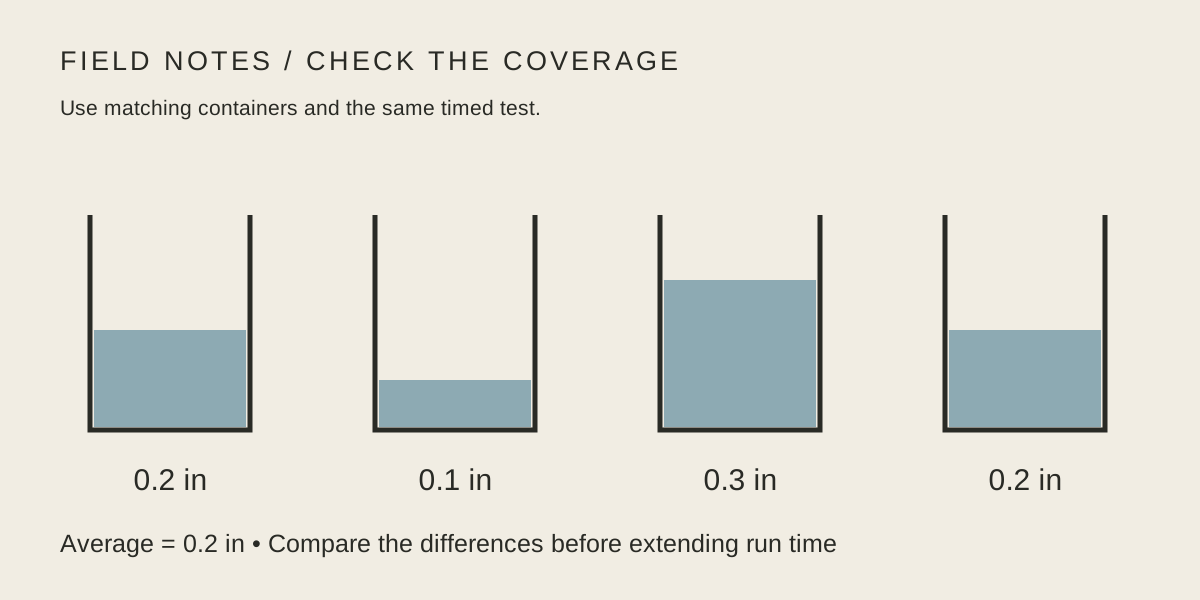
A timer tells you how long the system ran. It does not tell you how much water reached each patch. Start an audit with a simple sketch, a notebook and matching straight-sided containers. You may already have everything you need.
Walk the zone
EPA WaterSense recommends inspecting, connecting, directing and selecting appropriate irrigation controls. Look for leaks, damaged heads and spray hitting pavement. Record the issue and location before attempting a repair. System pressure and underground problems may need a qualified irrigation professional.
Measure coverage
Place matching catch containers across the zone, including dry and healthy areas, then run a timed test. Compare depths. Big differences point to a coverage problem; extending run time for the driest cup also adds water elsewhere. Repeat the test after a repair so you have a before-and-after comparison.
Turn depth into a useful estimate
Add the collected depths and divide by the number of containers. Application rate is average depth divided by test minutes. For example, an average 0.2 inches in 15 minutes equals about 0.013 inches per minute; applying 0.4 inches would take about 30 minutes. That is arithmetic, not a watering prescription. Choose the target depth and timing for your roots, soil, weather and local guidance, and stop runoff rather than forcing a long cycle.
A rain gauge in one place cannot tell you whether every sprinkler zone is uniform.